THE PROPERTY
6 BRACKEN TRACK, CLOSEBURN STATION
THE HOME
- Building Area
- 323sqm
- Land Area
- 3547sqm (more or less)
- Bedrooms
- 3 + 2 studies
- Bathrooms
- 2
- Car Parking
- Double Garage
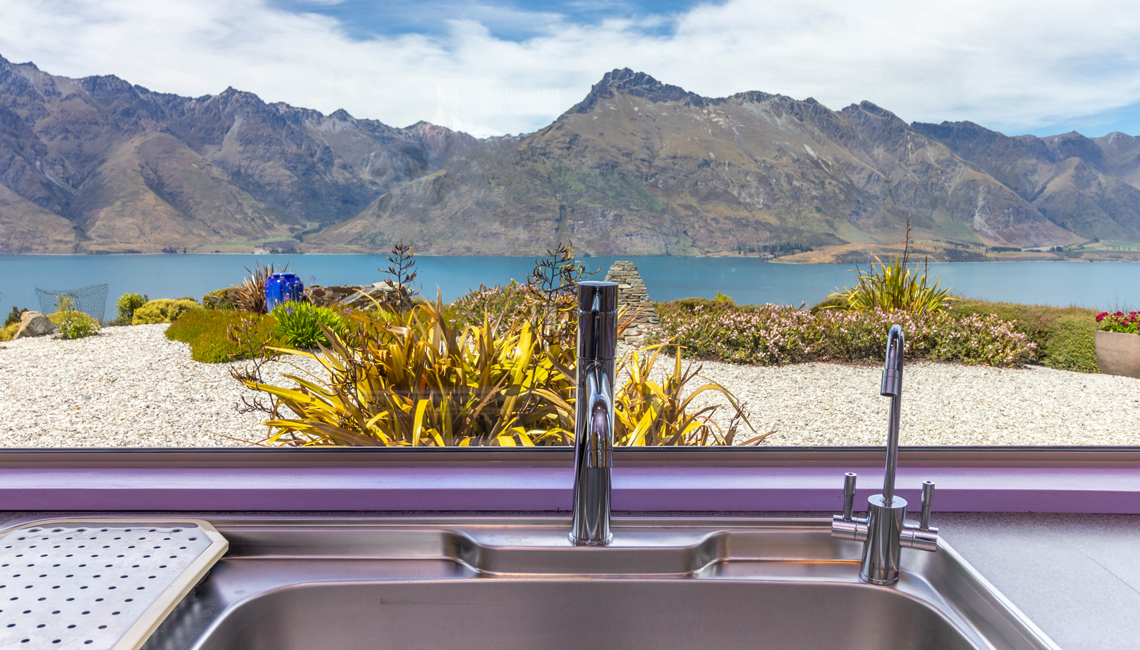
Elevated views - elevated lifestyle!
Property Description & Information
Layout
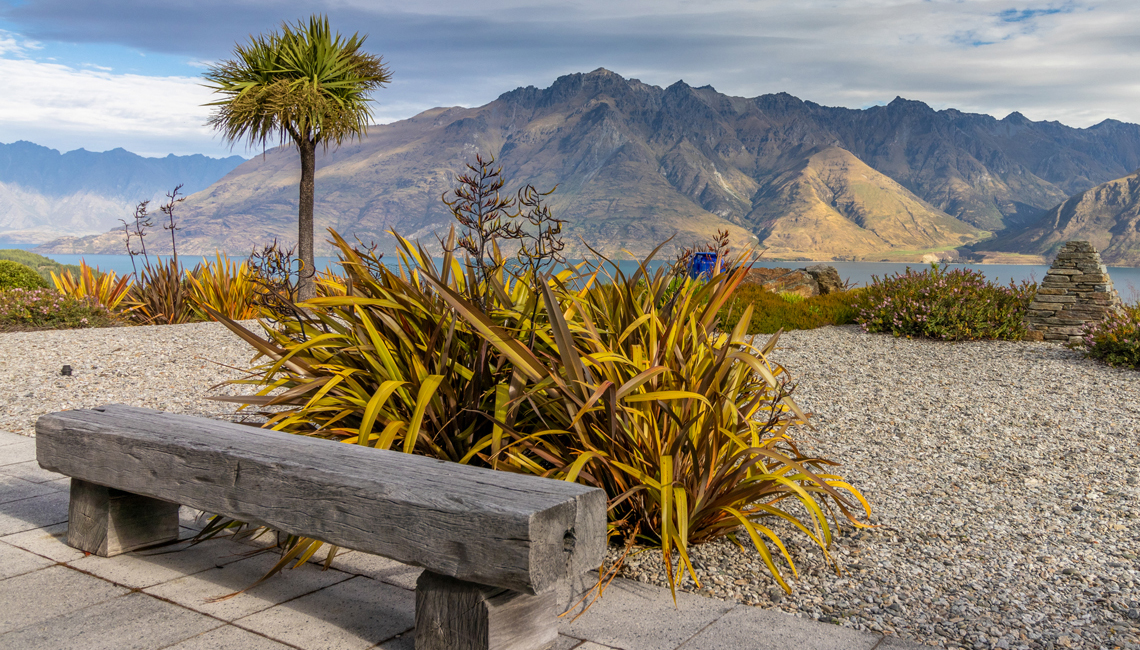
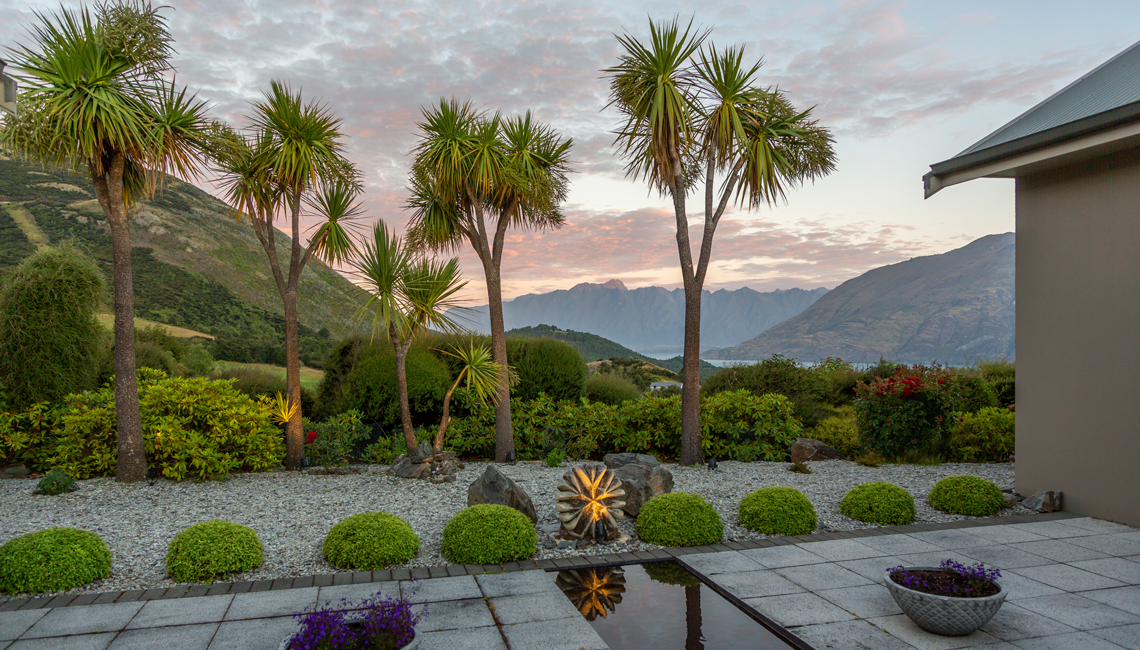
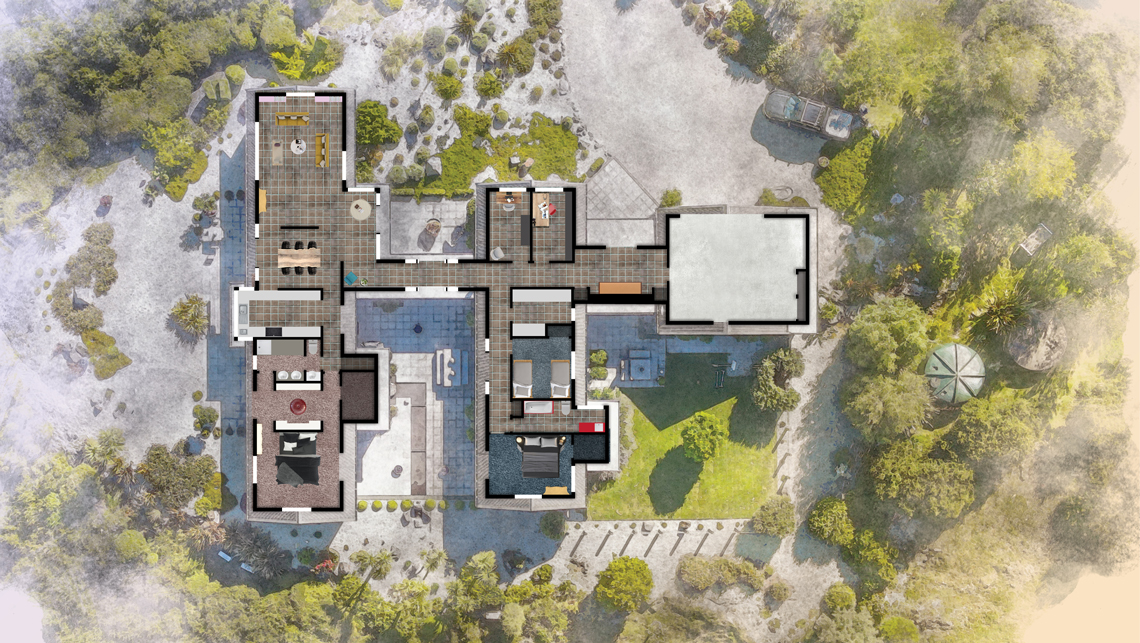
The living area of the home, located at 6 Bracken Track on Closeburn Station, is an H-shape and all on one level. It sits on a freehold land area of 3,547 square metres. The house itself has a floor area of 325 sq. m., including a two-vehicle garage but excluding paved courtyards. There are four paved outdoor areas surrounded by a garden of well-established NZ native trees and shrubs, and other plants suited to an alpine climate.
The house has two main living modules, one for the owners, the other for guests. There are also plans and a suggested site for a guesthouse.
Outdoor Living
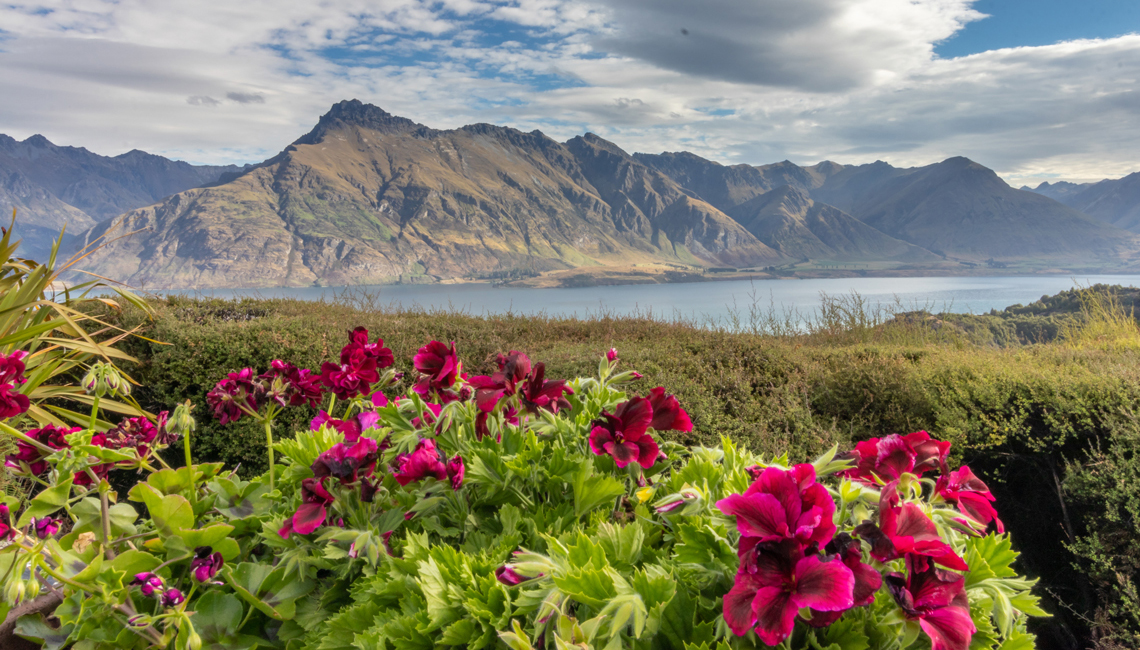
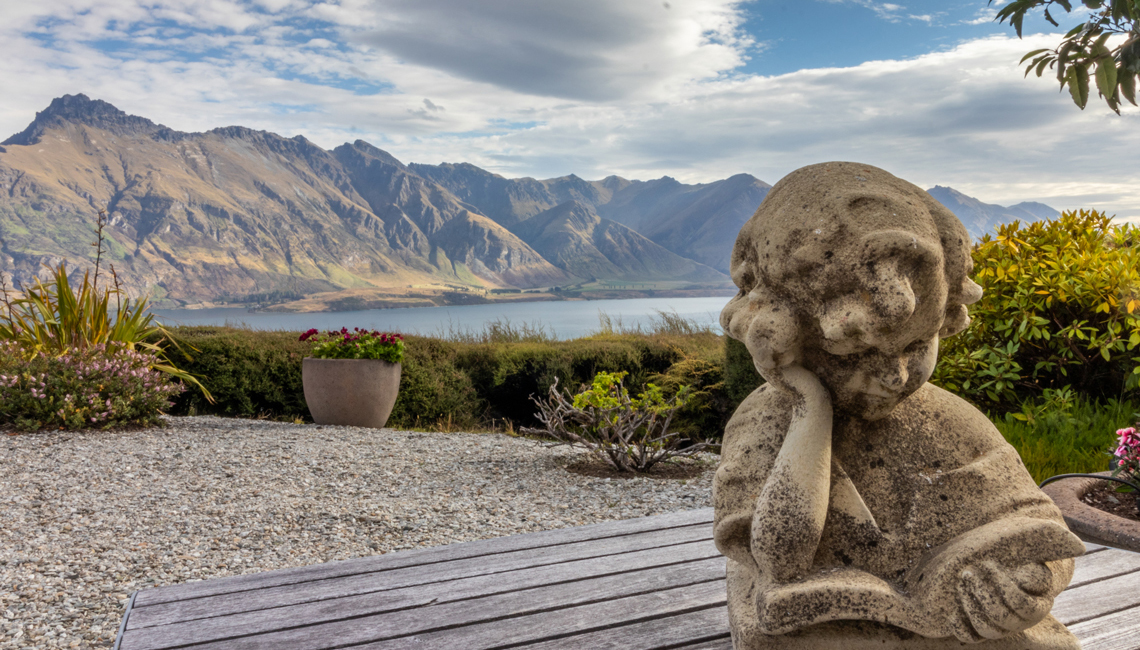
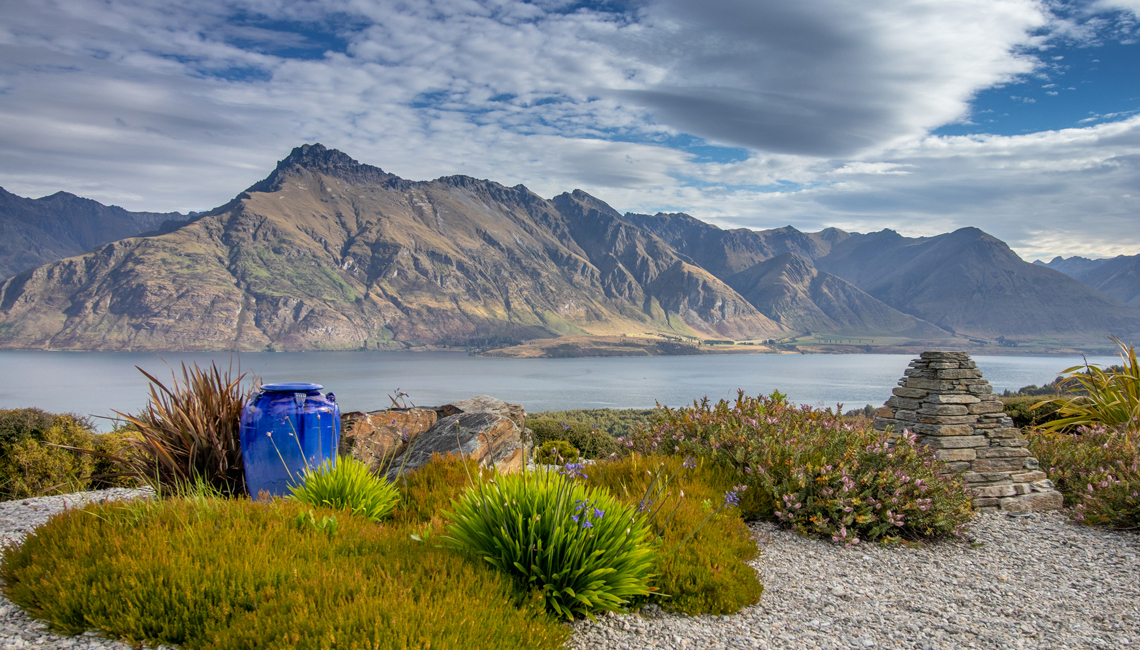
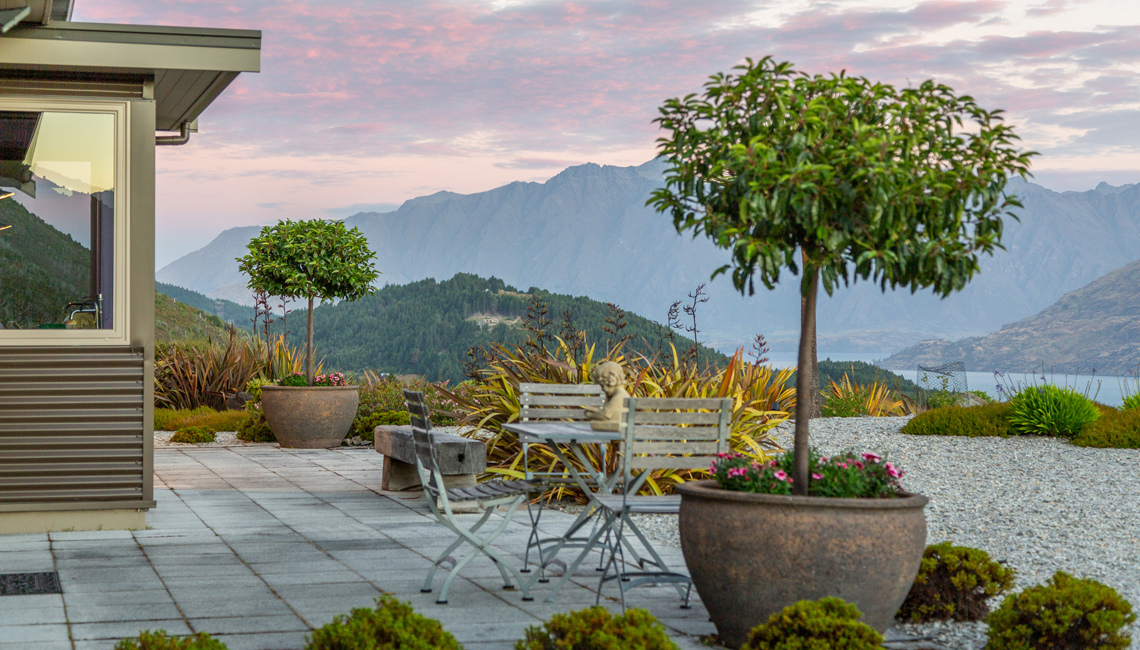
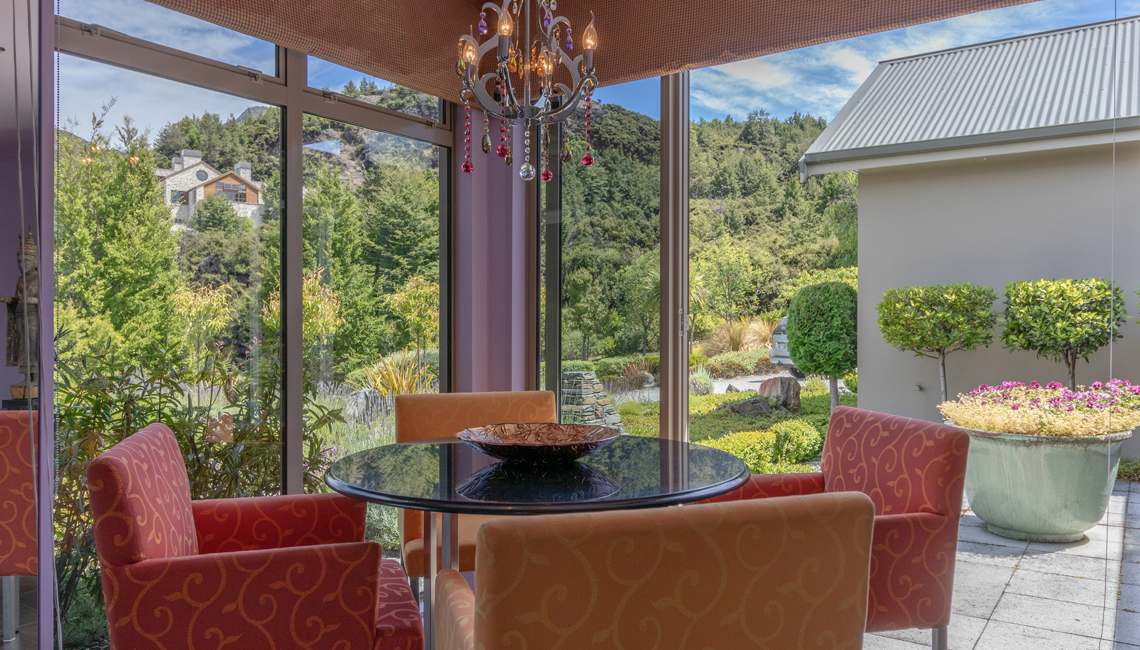
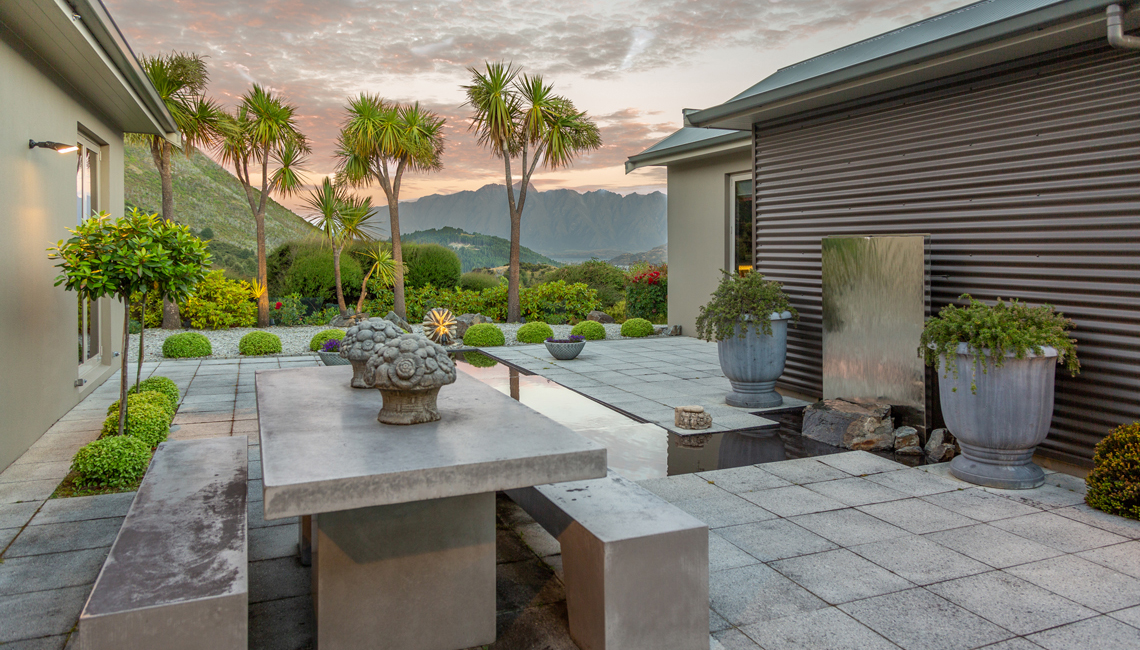
The eight spring, summer, and autumn months from the start of September until the end of April are often ideal for outdoor living and dining. Most of this time is in New Zealand’s daylight-saving period. There are three paved courtyards suitable for outdoor dining. They face north, east, and south, providing protection from any prevailing wind. The paved patio overlooking Lake Wakatipu has a panoramic vista to the east, south, and west. All four paved areas around the house are planted with decorative trees, lavender, herbs, and heritage roses.
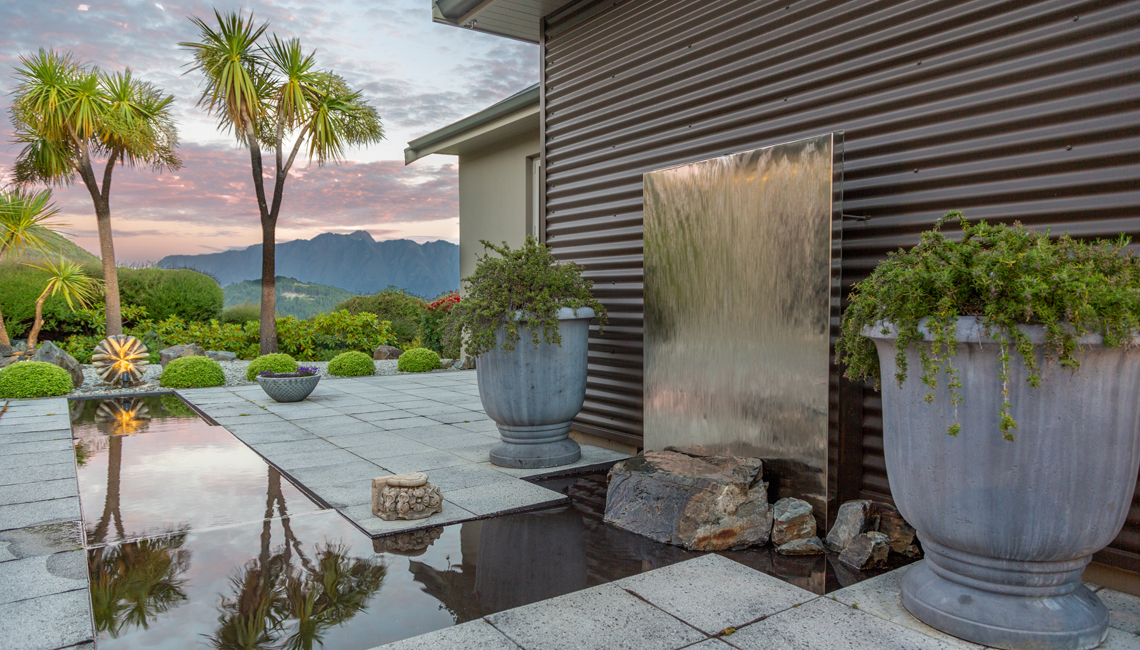
The main courtyard has a three-pool water feature fed by a fountain. This area can be covered by a removable shade-sail and is ideal for summer days. Outdoor tables and benches are in the main courtyard and the north-facing courtyard, which is grassed and fenced. Outdoor cushions go with the benches. There is an additional outdoor dining table with chairs for six in the silver birch dell on the north side of the house. It is surrounded by a garden of wildflowers and native grasses.
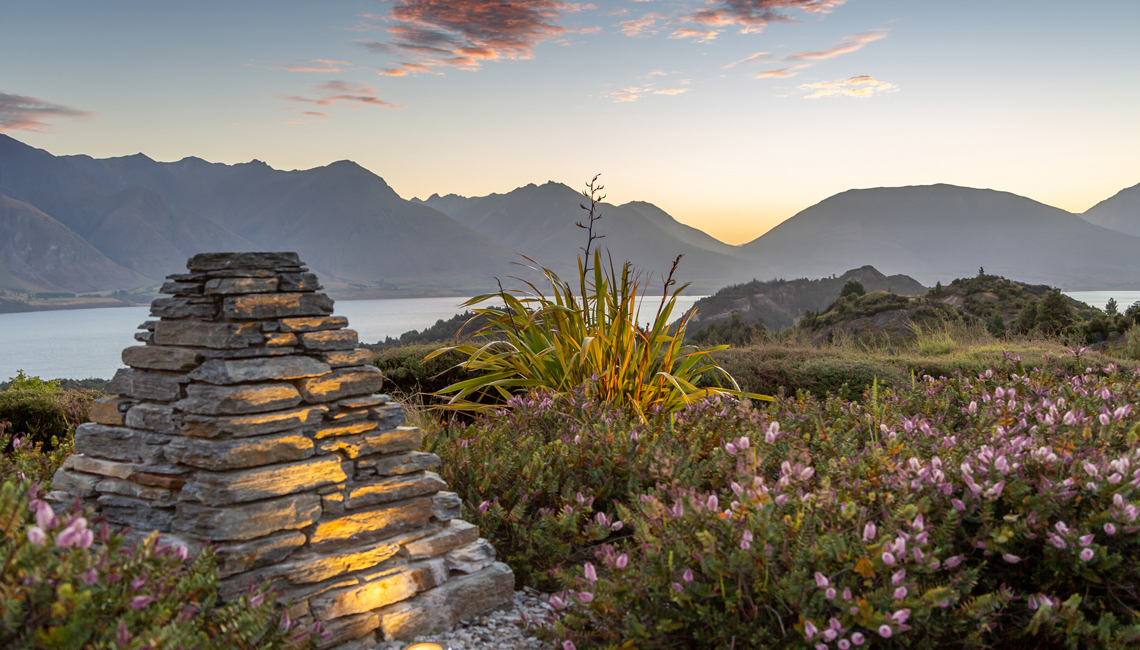
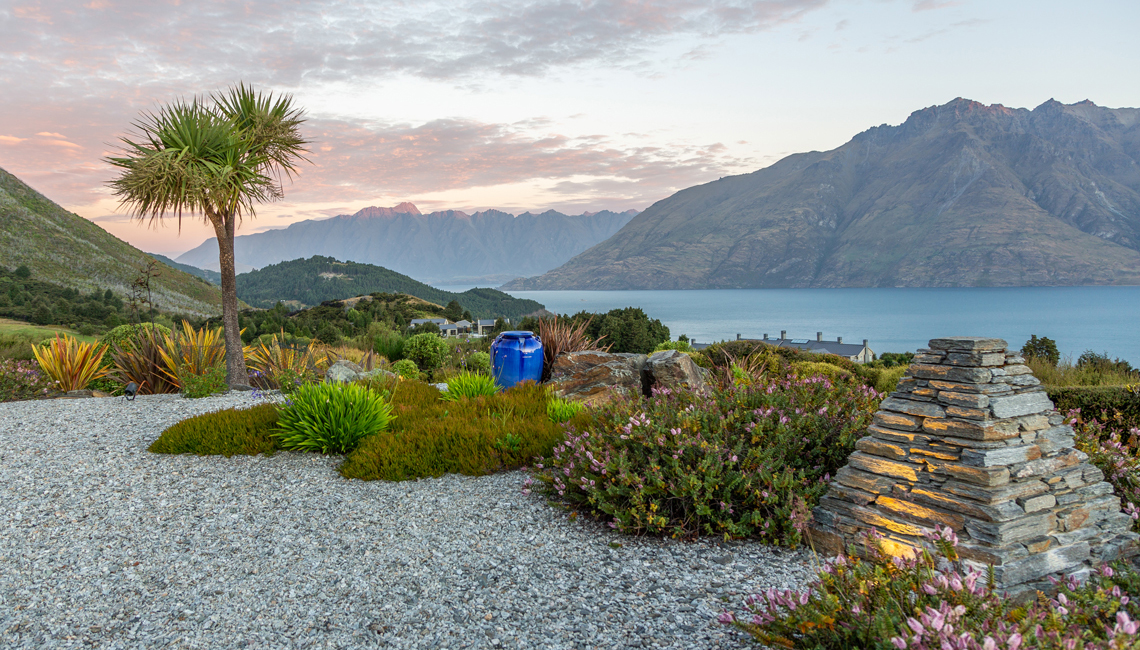
The whole garden at 6 Bracken Track is planted so that it shows colour and form for much of the year. Vegetation has been chosen and placed to flower at different times. Feeding birds, especially the property’s colonies of native bellbirds and tuis, thrive in this environment. Focal points around the garden have night-time up-lighting. The garden has a pop-up irrigation sprinkler, spray, and drip system on an electric timer.
Indoor Living
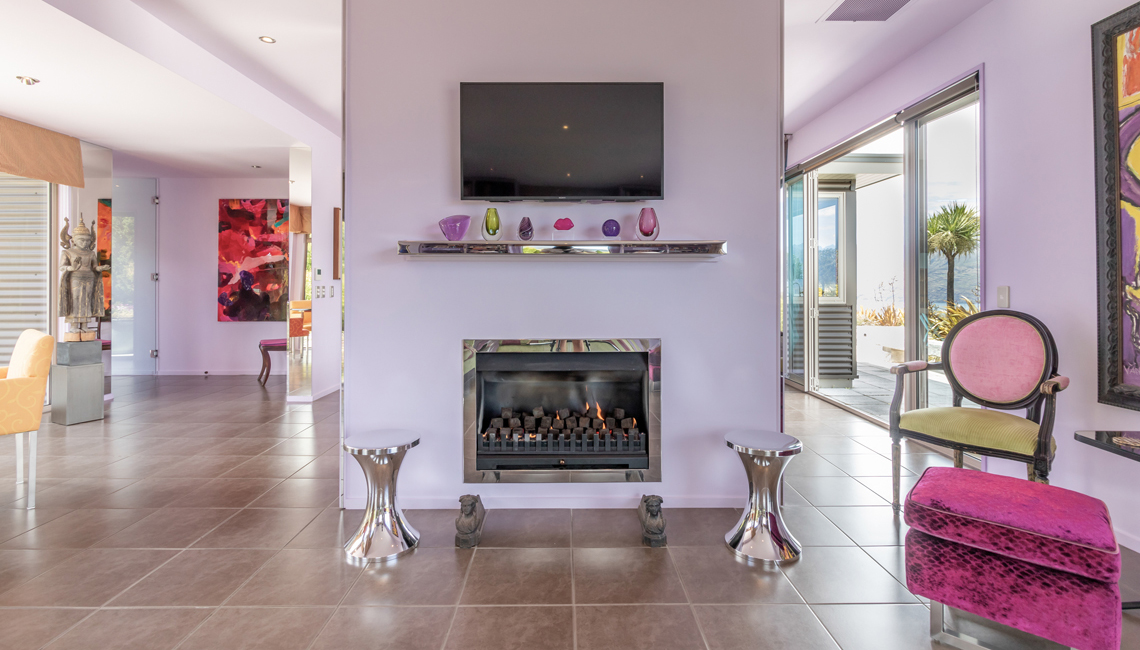
Winter can be cold on Closeburn Station, with occasional snow down to lake level. The house has double-glazed windows and courtyard access doors. The owners have taken trouble to make sure it is pleasantly warm at cold times and pleasantly cool when hot. There is ducted heating and cooling through ceiling vents, powered by three Fujitsu heat pumps. They are controlled by small wall-mounted monitors in different parts of the house. The heat pumps run quietly. They have also been installed several metres away from the walls of the house to further muffle sound and aid efficient running. There is an attractive gas fire in the living room. Siemens electric radiators have been hung low on walls in key areas of the house for quick supplementary heating. Electric underfloor heating was part of the home when it was completed in 2006. However, the owners decommissioned the underfloor heating, replacing it with the far less expensive and more efficient heat pump system.
Exterior Construction & Insulation
Steel reinforcing rods run upwards from the concrete foundations of the house through the hollow centres of the poly-block bricks. The hollow centres were packed with concrete. The poly-block walls were then framed with timber.
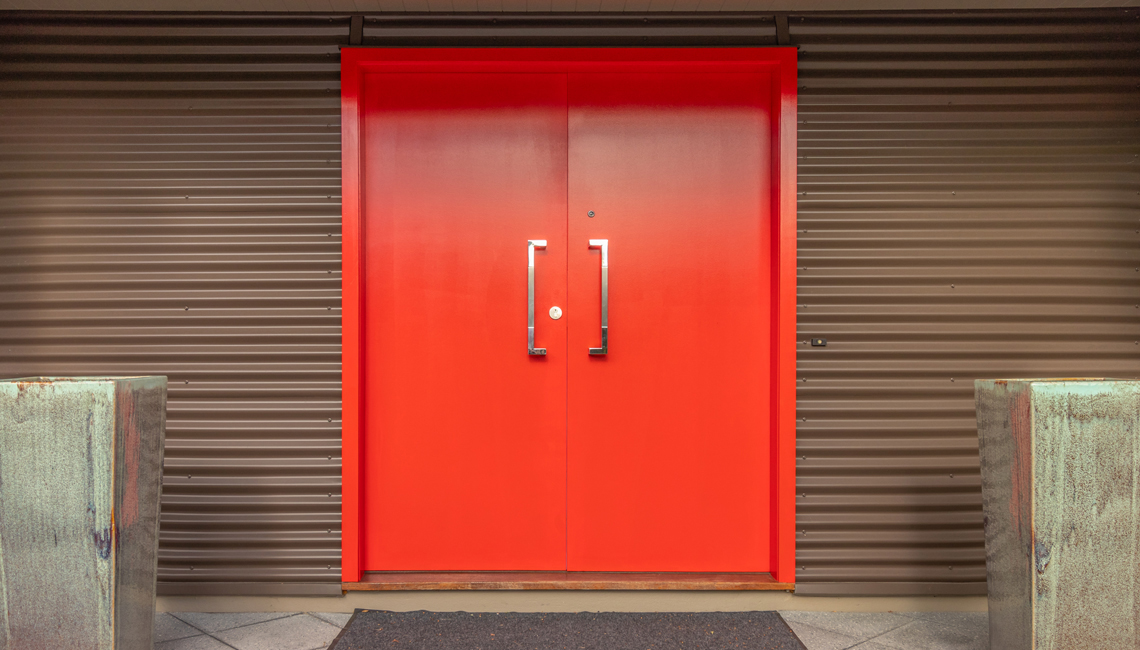
Each poly-block is made of lightweight polyurethane and provides added insulation to the walls of the house. The poly-block walls have a durable, hard-plaster exterior finish recently re-painted in bronze tussock brown. Some sections of the external walls are covered with horizontal Colour Steel panels in alpine olive as design features of the house.
Overall insulation has been enhanced by retrofitting thick NZ-made wool block pads on top of standard fibre glass insulation. The extra layer is above the ceilings in the peak-roof sections covering both the owners’ living area and the guest module. The long-lasting alpine olive Colour Steel covers peaked sections of the roof, while new dove-grey Butanol membrane covers the flat roof sections. Extra fibreglass insulation has been added beneath all flat roof sections.
There is manhole access to all peaked roof areas of the house.
Living/Dining
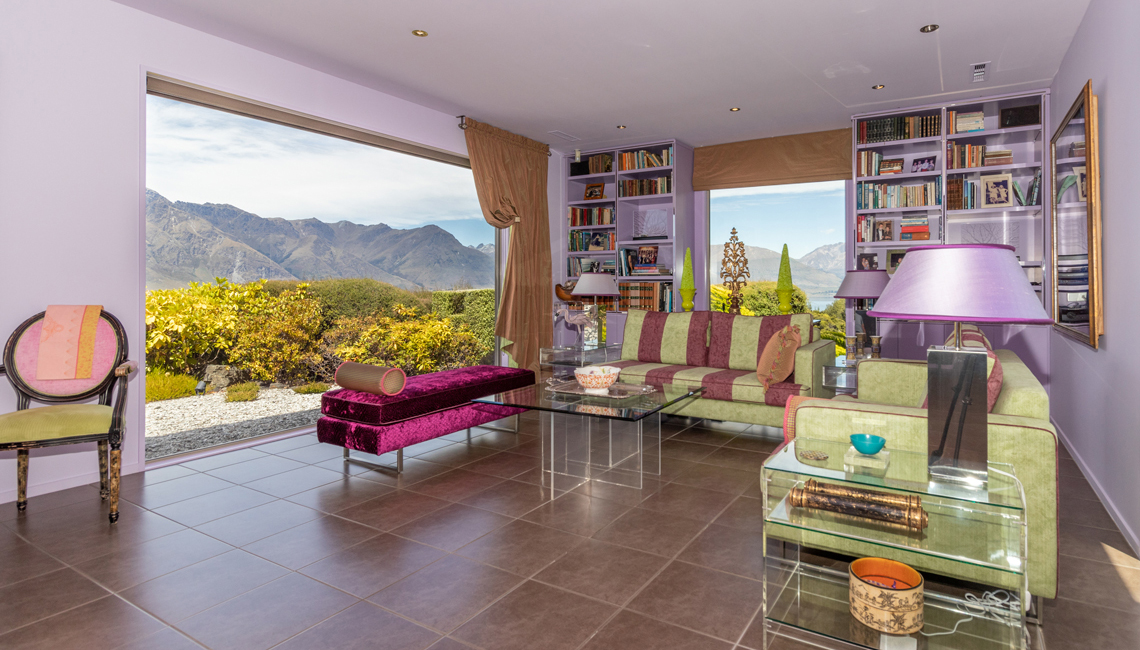
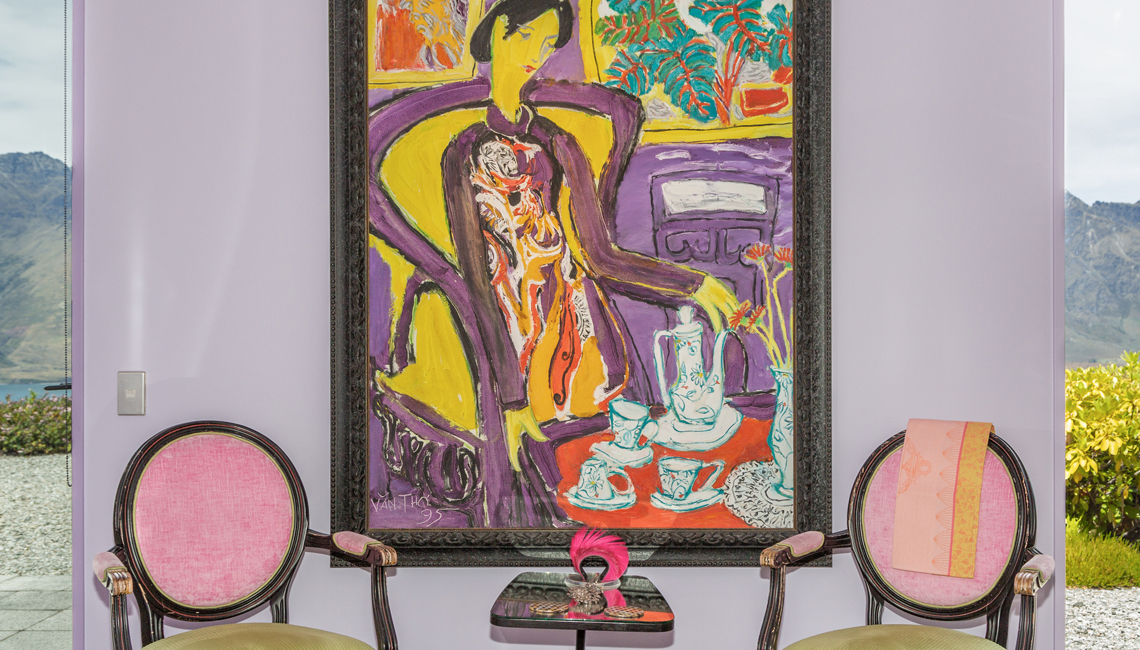
When this home was originally laid out, it was positioned to catch the maximum amount of sun in winter and take full advantage of the spectacular, year-round views from the levelled site it sits on. Amanda Richardson, one of the owners, is a professional interior designer. She worked closely with Queenstown architect Michael Wyatt, to create the concept for the house.
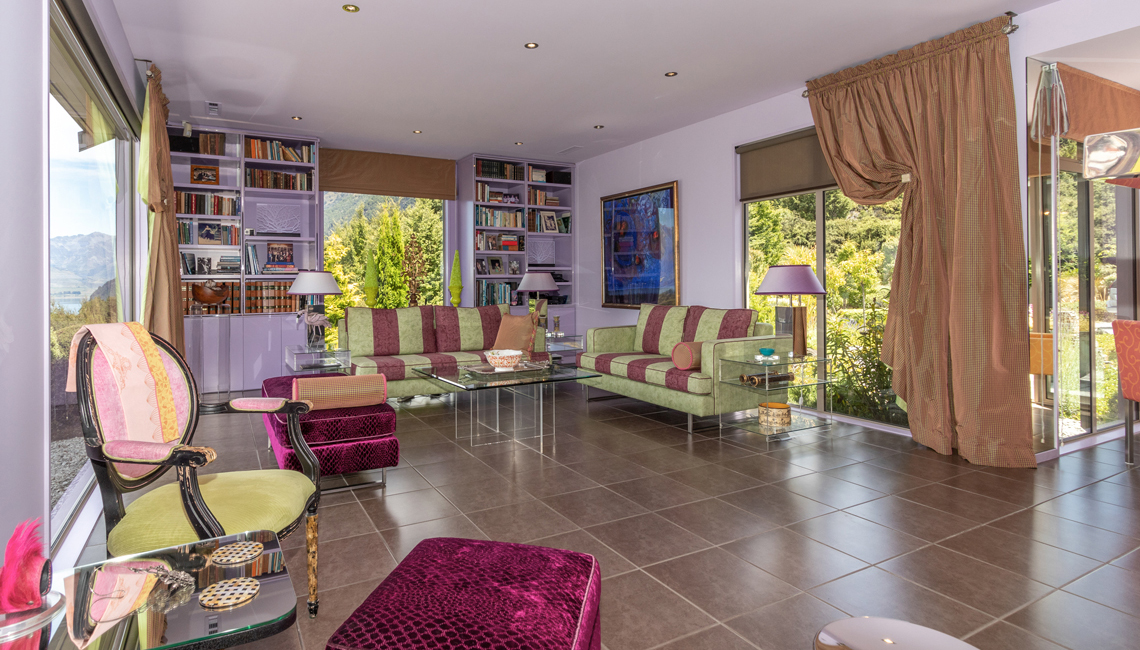
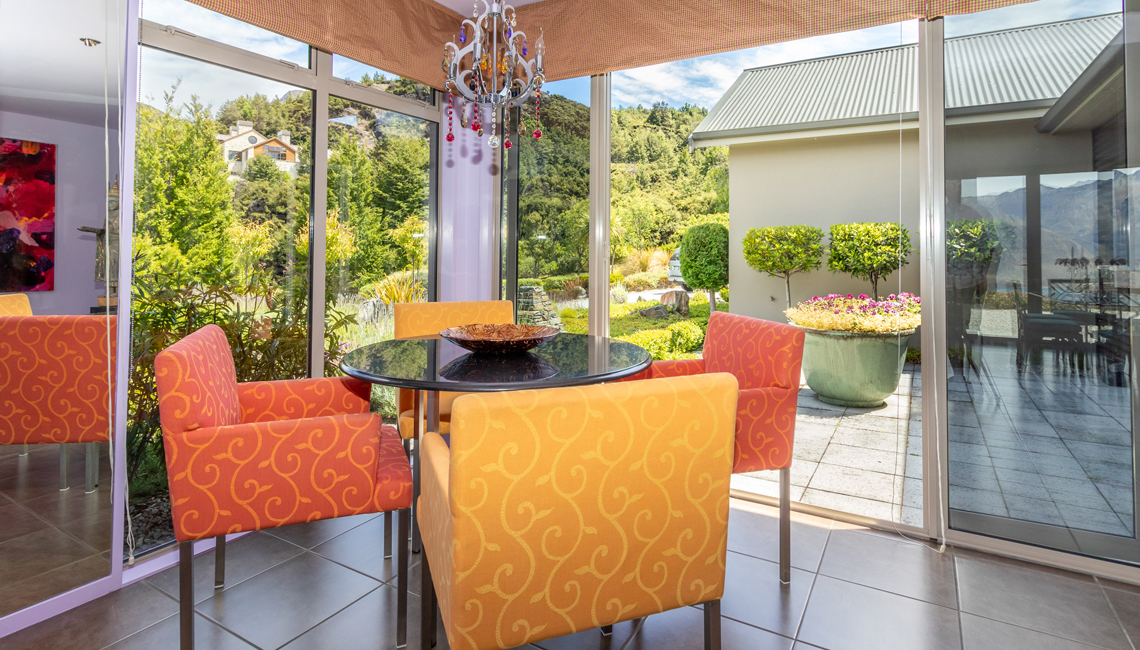
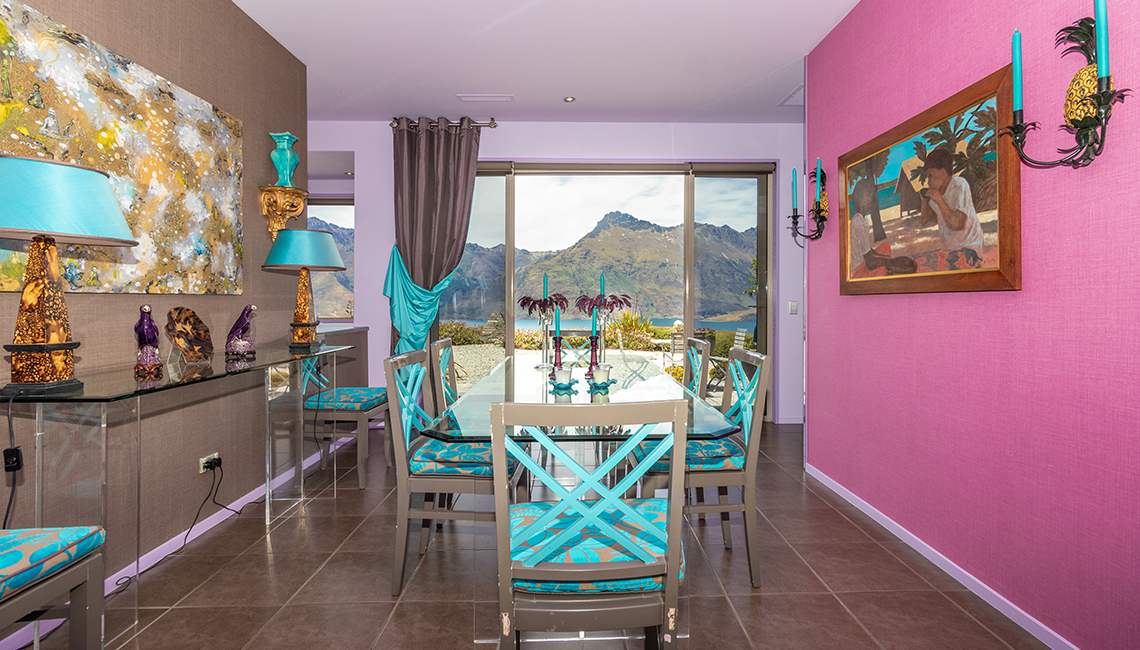
The living room and adjacent conservatory and dining area, which has a built-in drinks cabinet and easy access to the kitchen, all benefit from this layout.
Kitchen
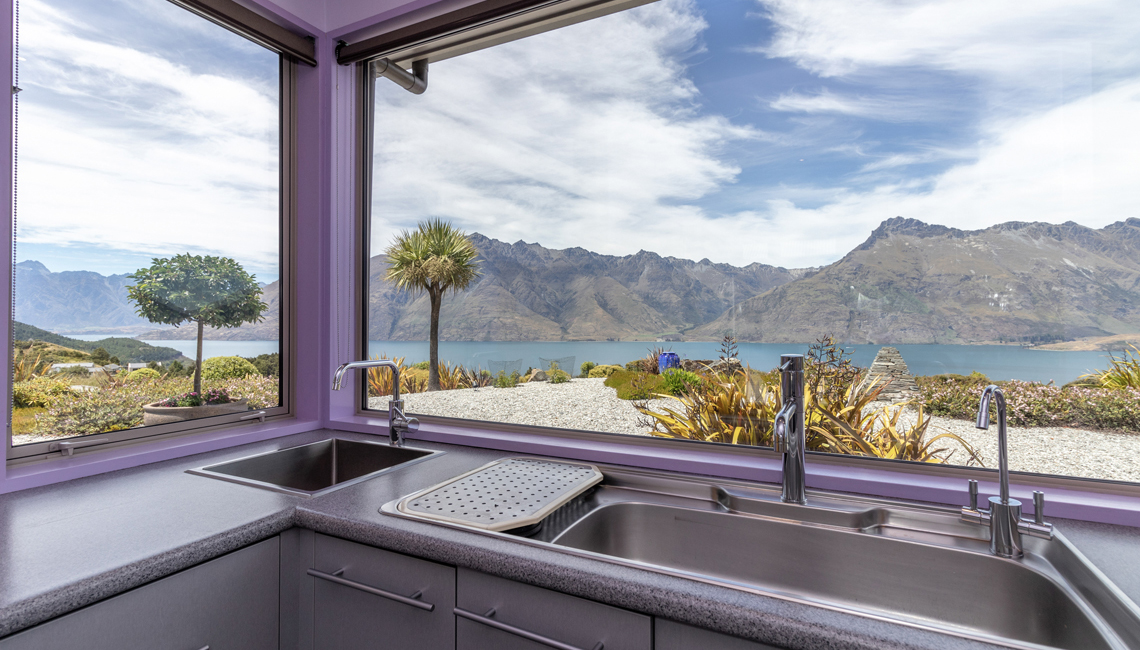
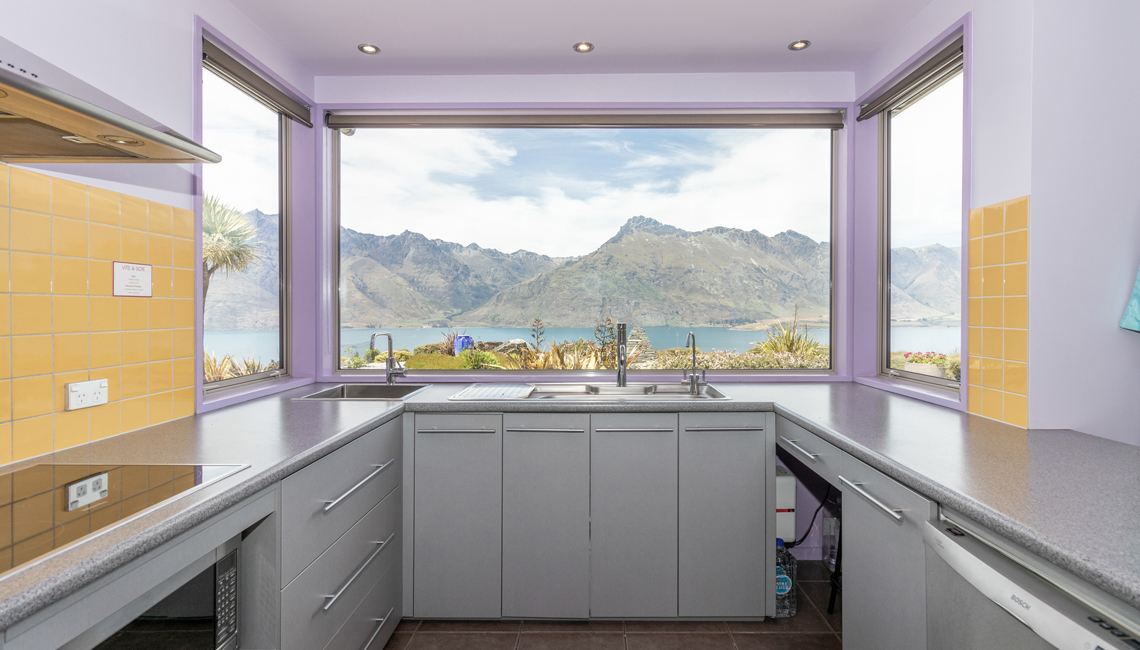
Designed with care and fore-thought, the kitchen has an array of pull-out shelves, drawers, and wall-mounted storage. There are two sinks. The Fisher & Paykel fridge has a 10-bottle wine rack above it. Other appliances include a Miele flat-top stove and adjacent grill with an extractor hood; a Panasonic microwave; a Bosch dishwasher and oven with warming drawer; and a wall-mounted TV and Sonos speaker linked to the living room communication hub.
Fast internet has been upgraded by a reliable Lightspeed connection, enabling program live streaming via a new Sony wall-mounted TV screen above the living room fireplace. The sound system throughout the owners’ living module has also been upgraded and connected to the main guest room.
Bedrooms & Bathrooms
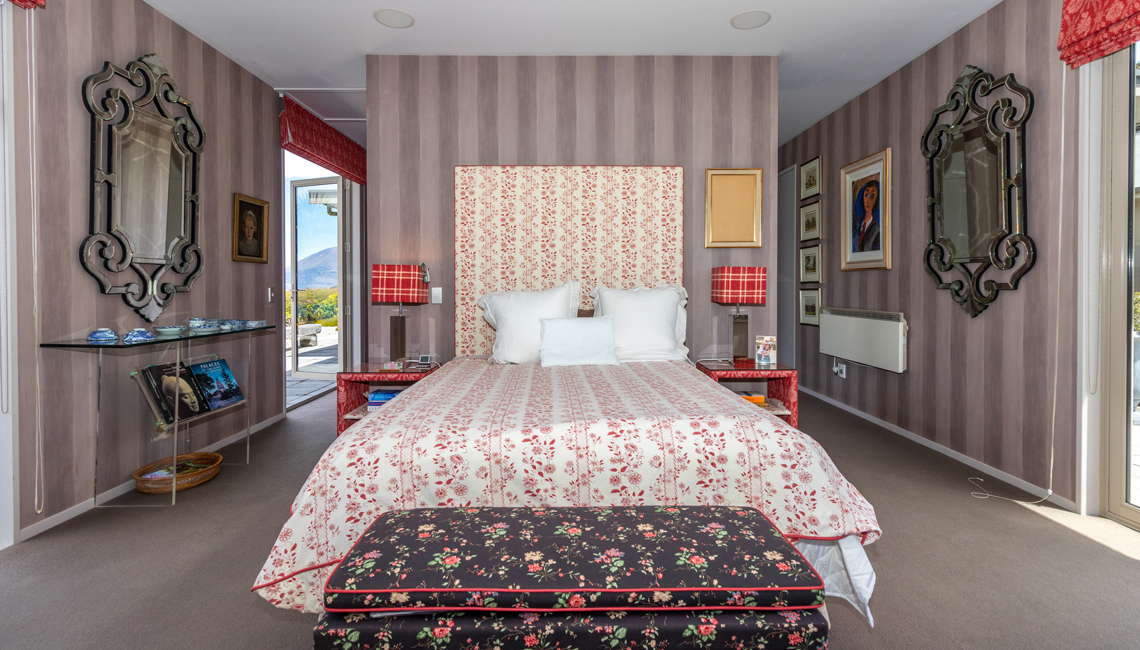
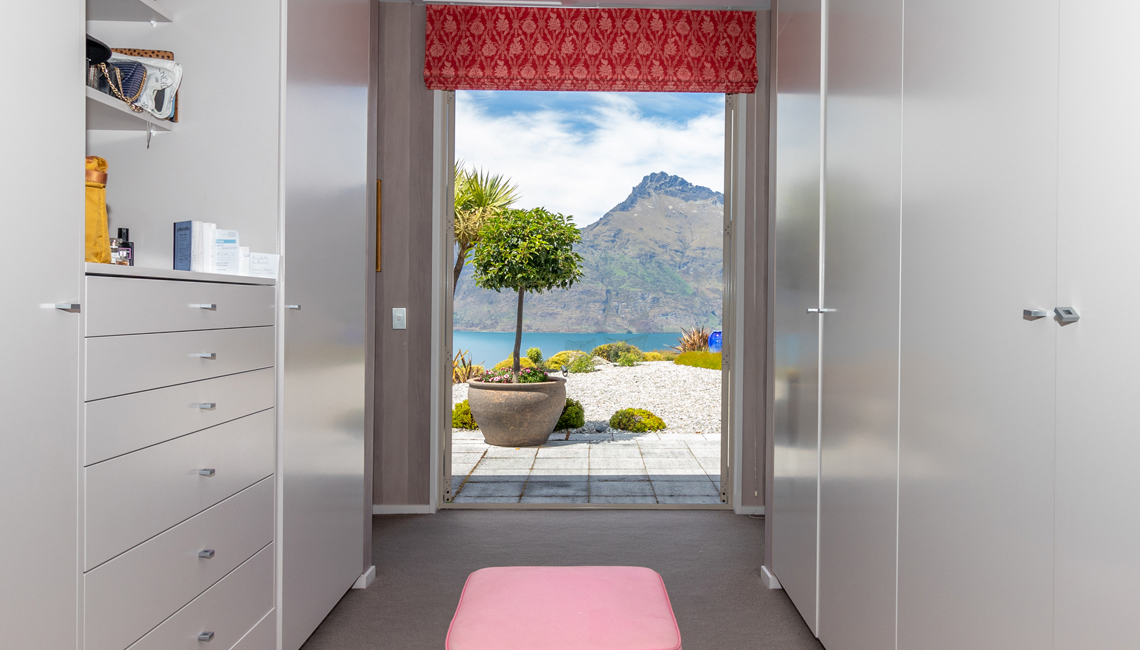
There are three bedrooms. Master has a queen-size bed and a dressing room with fitted wardrobes. It also has a walk-in dressing room with clothes hanging and storage areas. The main bedroom and the two guest bedrooms are carpeted throughout.
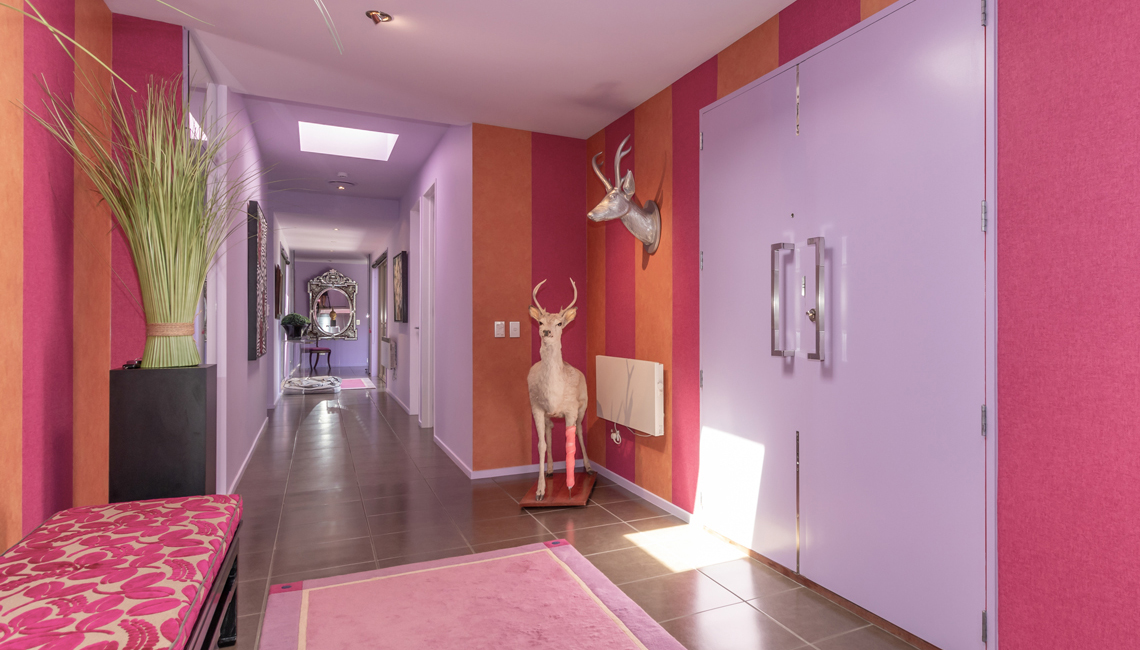
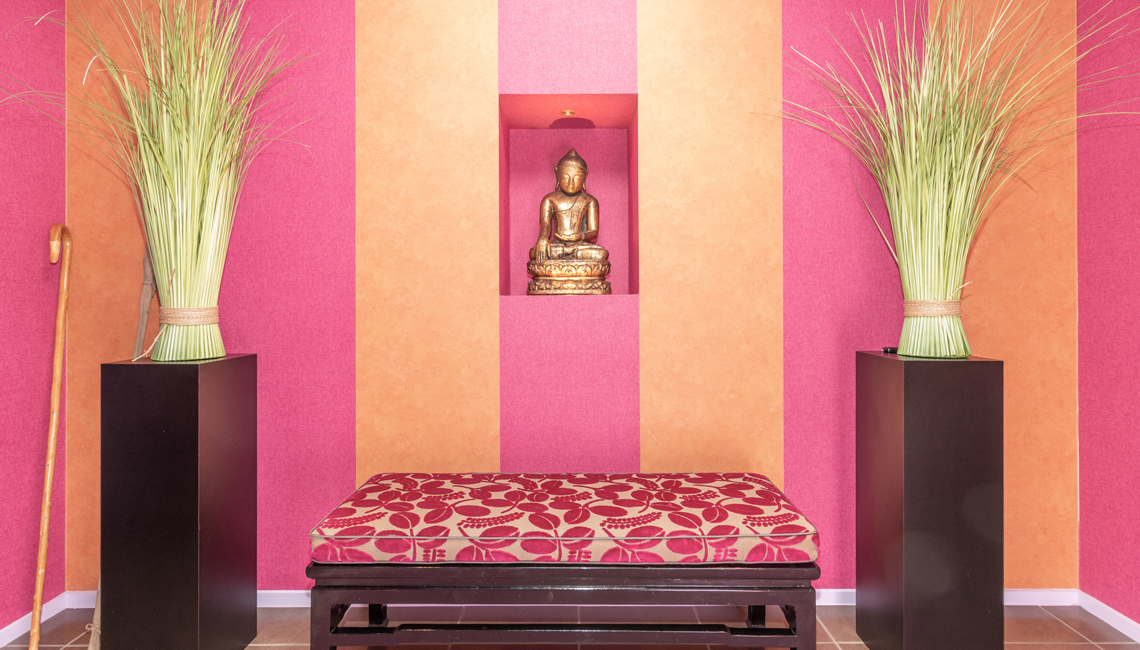
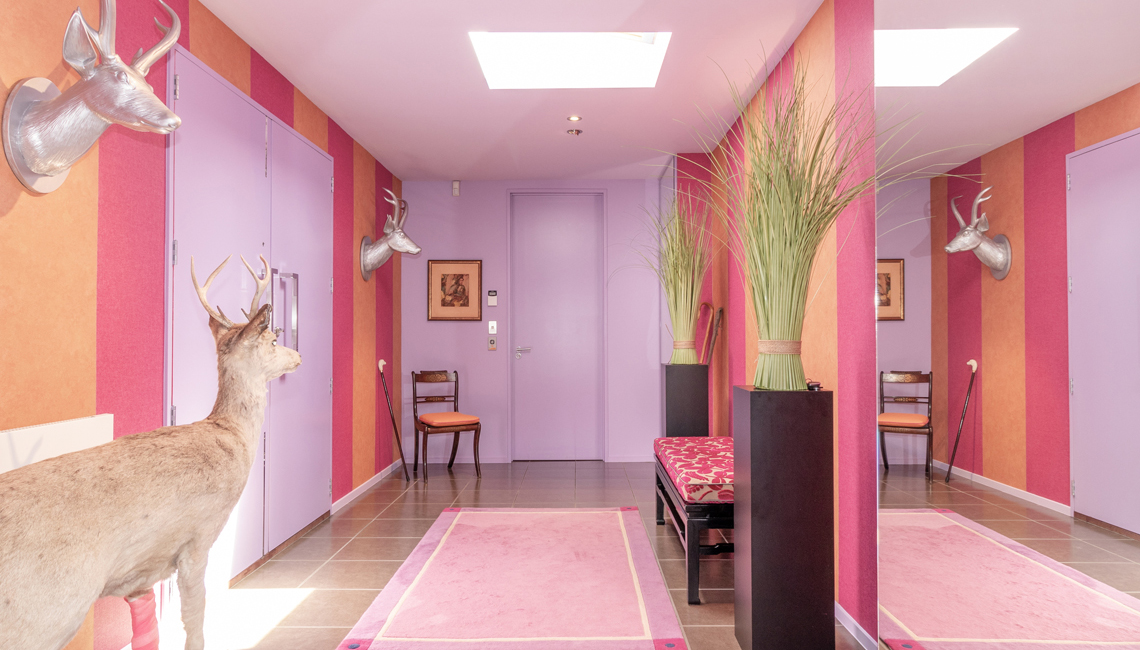
The floors of the living room, conservatory, dining area, and kitchen are covered in fawn-coloured tiles. So is the gallery linking the two living modules. The tiles are an attractive, easy-to-clean feature of this high-country house. They are enlivened by multi-hued rugs.
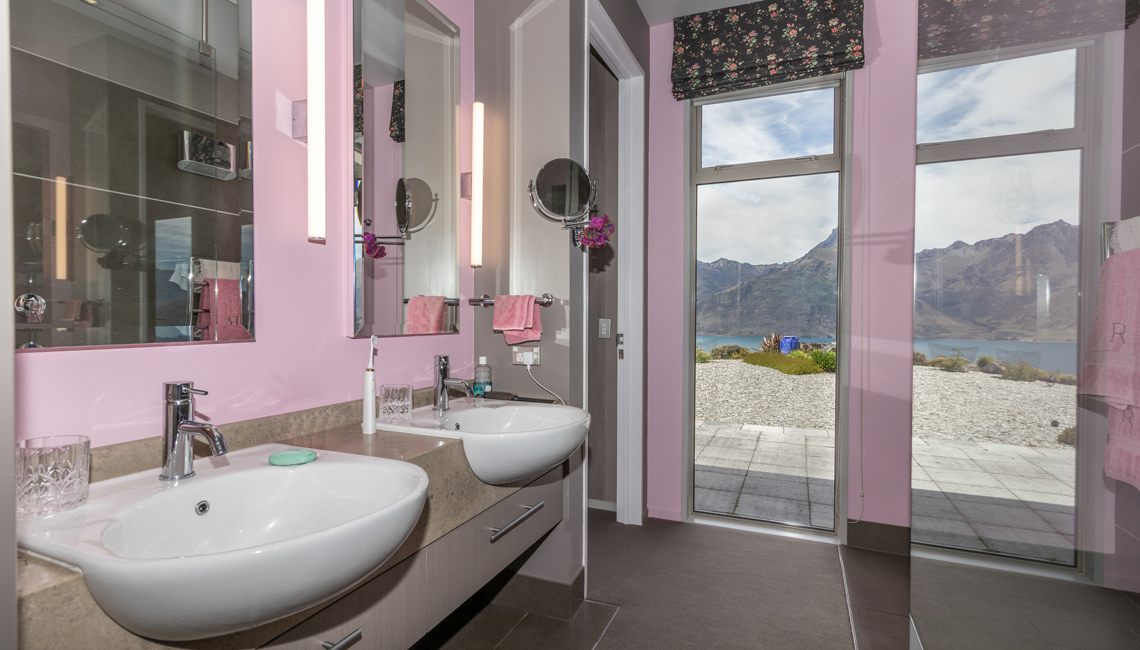
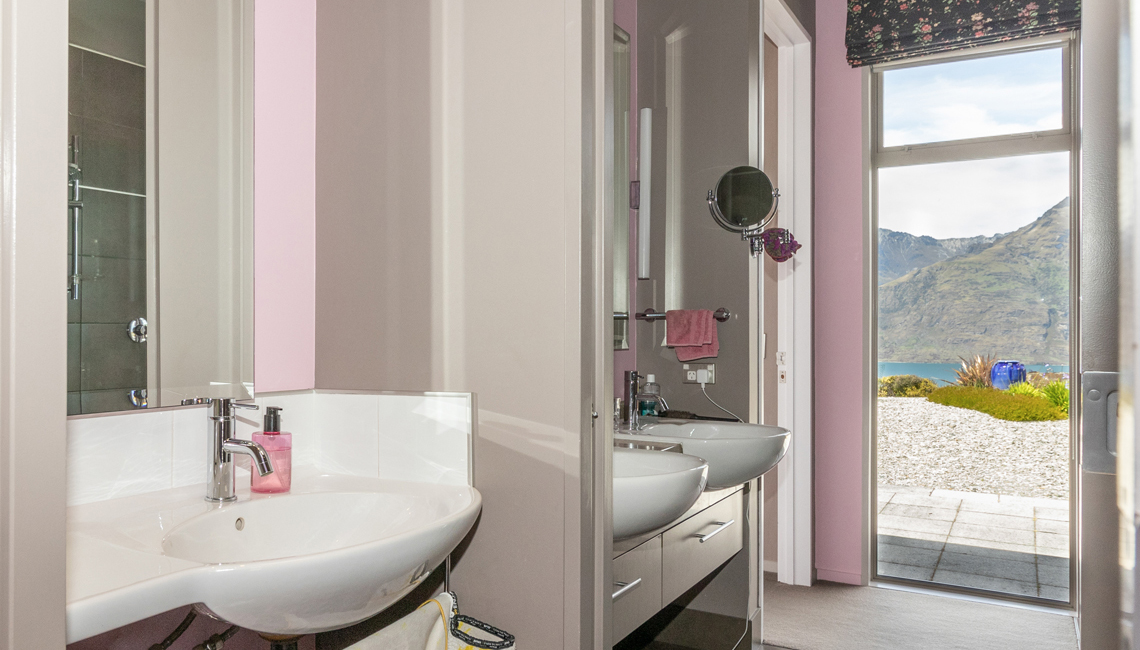
There are two bathrooms. Master has twin basins and a walk-in shower. The guest bathroom has a bath with shower.
Two adjacent office/study rooms are part of the guest module. They could be converted into two single bedrooms. Alternatively, the partition wall between them could be removed to make an extra bedroom, or a media room.
Garage
Designed for two vehicles and extensive storage in, and above, custom-made cupboards lining two walls, the garage is unheated. However, it has a specially laid long-wearing carpet to reduce cold from the concrete floor during winter. The garage also contains an LG refrigerator and a Westinghouse freezer. In addition, it houses a new Grundfos pump providing water to the house.
Why Are The Owners Selling?
The owners hold Australian and NZ passports. Their home has been owner-occupied since the new build was finished in 2006. There is no mortgage on the property. They are not in a hurry to sell. In many ways, they would like to remain where they are, unless they can find the right buyer who will appreciate the unique character of their house, its garden, and the Closeburn Station high-country lifestyle.
However, they are in their mid-70s and feel the time has come to downsize and spend more time with their daughter, son-in-law, and two grandsons in Queensland.
Local Authorities
The Queenstown Lakes District Council (QLDC) sets the annual rates for the 6 Bracken Track property. They total $4,740.42 (GST inclusive) from 1 July 2020 to 30 June 2021. The Otago Regional Council rates for the same period amount to $528.06.
Since farming activity and other income for Closeburn Station pay only a portion of the costs of running the station, the Board, through Closeburn Station Management Ltd, has set the levy all shareholders pay quarterly in the 2020/21 financial year at $4,743.75, or an annual GST-inclusive total of $18,975. Because of prudent management and forward planning by the Board, this total is substantially less than the total annual levy of some $26,000 paid by each shareholder just a few years ago.
The design of homes and ancillary buildings (including guesthouses), and the materials and colours used, must be approved by the Building Control Committee (BCC). The intention is that all 27 homes (21 of which have already been completed) should harmonise with the high-country environment. The BCC consists of three Closeburn shareholders with experience in the property and construction sectors, one of whom chairs the committee. They are assisted by a professional architect who acts as a consultant.
Once a set of detailed building plans has been approved by the BCC, which normally happens promptly, they must then be submitted to the QLDC for approval. This may take up to three months but can be expedited by employing an experienced consultant.
Water Supply
Closeburn Station is in the fortunate position of being able to tap two potable water sources, thanks to the foresight of the Board. It shares an underground aquifer with residents at nearby Bob’s Cove. It also has an exclusive right to draw fresh water from Lake Dispute on the property, not far from to the residential area. The normal daily allowance for each shareholder is 2,500 litres. 6 Bracken Track has two 25,000 litre tanks partially embedded not far from the garage. The above-ground tops of both tanks are screened by trees and other foliage.
The switch from aquifer to lake supply can be done quickly. The lake water is purified as soon as it is pumped from the lake by pipe. It is then stored in big tanks on a high tree-covered hill above the residential area to maintain good water pressure.
Electricity
6 Bracken track is supplied with power by Pioneer Energy, a local electricity supplier owning several small hydro-plants. The average cost is around $700 per month during winter and $400 in summer. Bottled LP gas in two large cylinders is replenished by Genesis Communications every fortnight throughout the year. The gas is for the living room fire and the BBQ in the main courtyard. The average monthly cost is about $150 in winter and $20 in summer.
There are two big Rheem electric hot water cylinders in the house, one for the guest module and the other for the owners’ quarters.
Sewage
Standard septic tank. The dispersal field was upgraded and enlarged in August 2018 for long life.